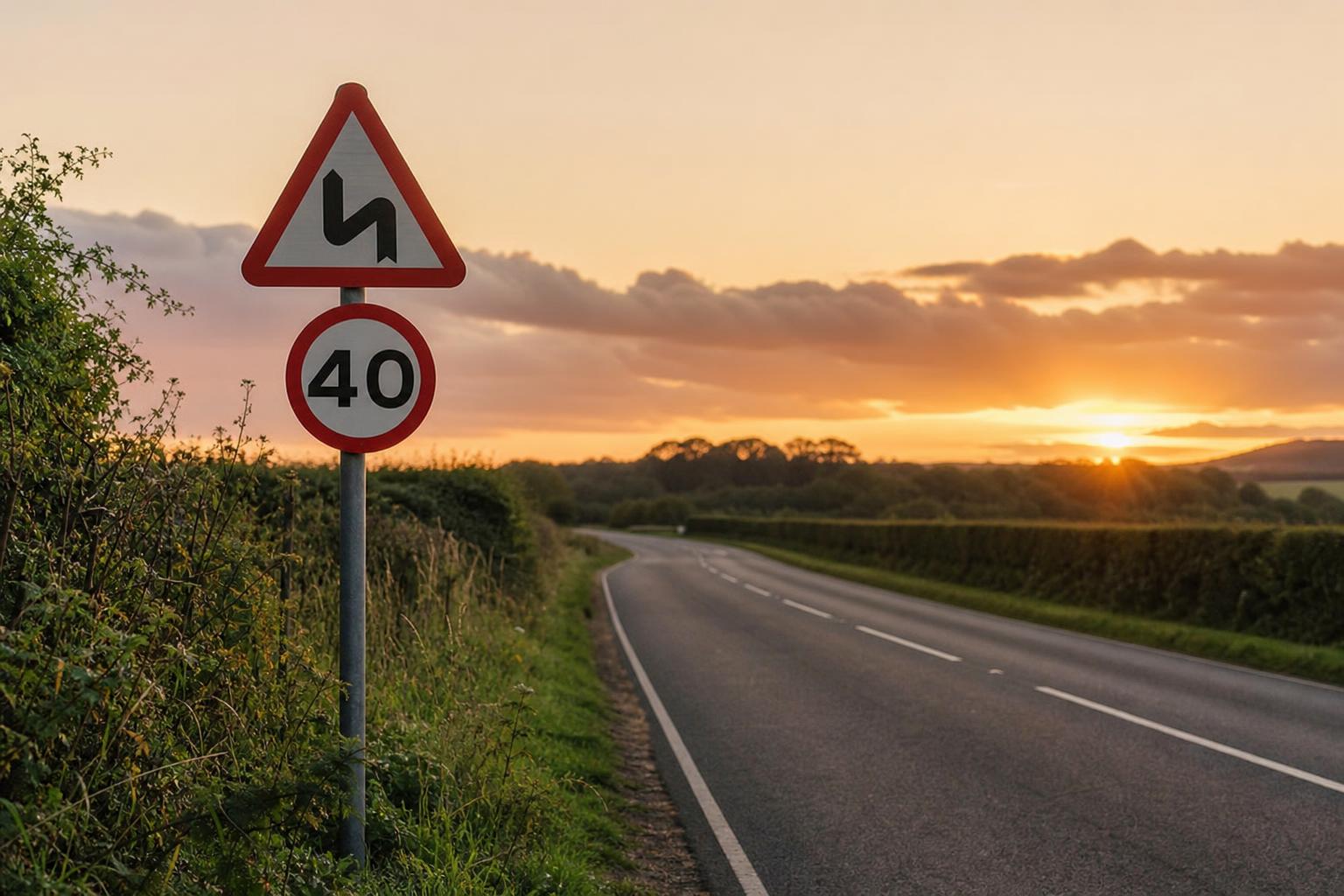
UK road signs are organised by shape and colour: red triangles warn, red circles prohibit, blue circles instruct, blue rectangles inform on motorways, green rectangles inform on primary routes, and brown rectangles point to tourist attractions. Memorise the families and you can decode 90% of signs you've never seen before. Below are the 12 most-tested signs in the 2026 DVSA bank — practise these and you'll handle every road-sign question on your theory exam.
Practice Questions & Answers
Q1. What does an inverted red triangle mean?
A1. Give Way — you must slow down and give priority to traffic on the major road.
Q2. What shape and colour is the only octagonal sign in the UK?
A2. Red octagon — STOP. The only octagonal sign; you must stop completely at the line.
Q3. A red circle with the number 30 inside means…
A3. Maximum speed limit 30 mph. Red circles are always restrictions.
Q4. A blue circle with a white arrow turning right means…
A4. Turn right ahead — a positive instruction (blue circle = you must).
Q5. What does a red circle with a single diagonal red line mean?
A5. No overtaking. Diagonal red bars on a circle mean prohibition of the depicted activity.
Q6. A red triangle showing a deer means…
A6. Wild animals likely in the road. A warning, not a prohibition.
Q7. What does a blue rectangular sign with white text indicate?
A7. Information on a motorway, e.g. junction numbers and destinations.
Q8. What does a green rectangular sign indicate?
A8. Information on a primary route (A-road).
Q9. A brown sign with a castle symbol points to…
A9. A historic site or castle — tourist attraction.
Q10. What does a circular sign with red border and a black motorbike mean?
A10. No motorcycles allowed.
Q11. Two arrows on a triangular sign pointing in opposite directions means…
A11. Two-way traffic crosses a one-way road — be ready for vehicles from both directions.
Q12. What does a yellow box junction tell drivers?
A12. Don't enter unless your exit is clear — you must not block the box.
Tips to Pass
- Group signs by shape first, colour second.
- Walk or drive familiar streets and name every sign aloud.
- Use flashcards for warning signs (there are about 60 to know).
- Pay extra attention to motorway signs — they appear on most theory tests.
- Don't forget road markings — yellow zig-zags, red routes and double white lines all get tested.
Take the full mock test
Explore more in Driving & Transport or browseall road signs tests.
Related reading: Top UK Road Signs Explained.
Quick study plan
If you only have a fortnight to prepare, split your time into three blocks. Spend the first few days reading any official handbook or syllabus straight through — don't try to memorise yet, the goal is familiarity. Move on to topic-by-topic revision, focusing on the areas you found least intuitive on the first read. In the final week, switch to timed mock tests under exam conditions; mark every paper ruthlessly and read every explanation, including for questions you got right by guessing. Most candidates improve by 8–12 marks between their first and third mock simply by closing knowledge gaps this way.
Common myths to ignore
Three myths trip up more candidates than any single topic. The first is that "if I sit enough mocks, I'll spot the real questions on test day" — modern UK exam banks contain hundreds of items and the question you see on the day will probably be brand new to you. The second is that you can cram the night before; most assessments reward calm focus more than recent recall, and tired candidates make basic mistakes. The third is that the pass mark is the only thing that matters: aiming for a comfortable buffer of 5–10 marks above the threshold is the single best insurance against an unlucky paper.
What to do on test day
Plan to arrive 15–20 minutes early with valid photo ID — usually a UK driving licence or passport — and any booking confirmation you've been emailed. Eat something light beforehand, drink water but not so much that you'll need a comfort break mid-paper, and silence your phone before you walk through the door. Read every question twice, flag anything you're unsure of, and never leave a blank — there's no negative marking on the assessments most readers of this site sit, so a considered guess is always better than no answer at all.