
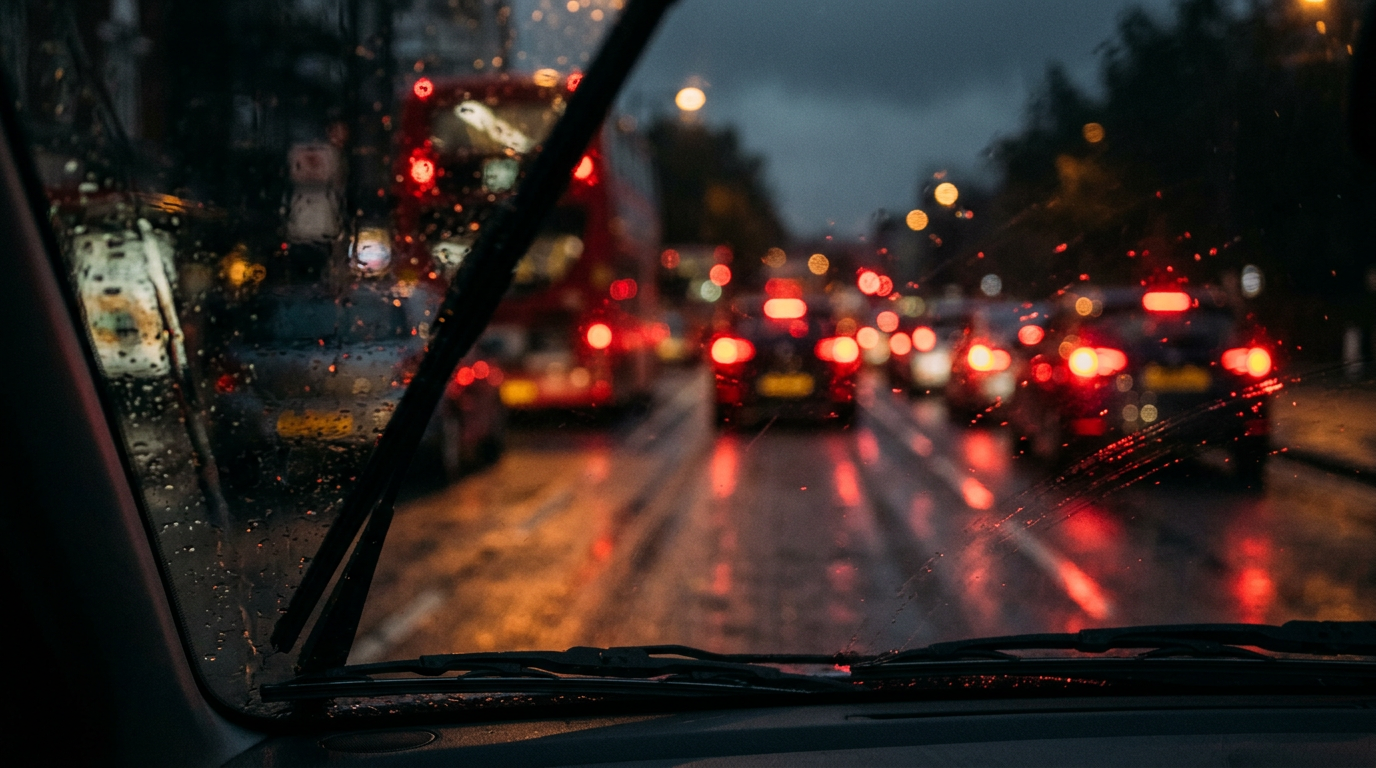
The hazard perception section uses 14 video clips containing 15 developing hazards (one clip has two). Each hazard scores 0–5 based on how early you click — the earlier you spot a true developing hazard, the higher your score. Click too early and you score nothing for that hazard; click in a rapid pattern and the system zeroes the entire clip. Below are 10 practice scenarios and the smart way to handle each, followed by the tips that take learners from 38/75 to 60/75.
Practice Questions & Answers
Q1. When does a hazard become "developing"?
A1. When something forces you to change speed or direction. Until then it's a potential hazard, not a developing one.
Q2. Should you click as soon as you see a parked car?
A2. No — parked cars are static. Click when one starts to pull out, opens a door, or a pedestrian emerges from behind it.
Q3. How many times can you click per clip?
A3. As many as you like, but rapid patterns cause a zero-score warning.
Q4. What happens if you click in a rapid pattern?
A4. The clip is voided — you score 0 for that hazard. Always click deliberately.
Q5. If you double-click on a hazard, what's the best timing?
A5. First click as the hazard begins to develop, second click as it becomes more serious.
Q6. Pedestrian on the pavement looking down at a phone — click?
A6. Click on the second look — they may step into the road. Don't click on the initial sighting.
Q7. Brake lights on the car ahead light up — click?
A7. Yes, immediately — brake lights are a confirmed developing hazard.
Q8. A child's ball rolls into the road — click?
A8. Yes, immediately. Children often follow balls.
Q9. A cyclist is wobbling in front of you — click?
A9. Yes — wobble = unpredictable = developing.
Q10. You see a cat run across 200 m ahead — click?
A10. No — too far ahead to require any action from you. Wait until something closer develops.
Tips to Pass
- Sit forward, focus on the central third of the screen.
- One thoughtful click per hazard, then a confirming second click.
- Never click in rhythm — the system flags it.
- Practise with at least 30 official-style clips before test day.
- Treat the first 3 seconds of each clip as orientation — most hazards develop after that.
- If you score below 44 on practice clips, slow down and spot earlier.
Take the full mock test
Explore more in Driving & Transport or browseall hazard perception tests.
Related reading: How to Pass the UK Driving Theory Test First Time.
Quick study plan
If you only have a fortnight to prepare, split your time into three blocks. Spend the first few days reading any official handbook or syllabus straight through — don't try to memorise yet, the goal is familiarity. Move on to topic-by-topic revision, focusing on the areas you found least intuitive on the first read. In the final week, switch to timed mock tests under exam conditions; mark every paper ruthlessly and read every explanation, including for questions you got right by guessing. Most candidates improve by 8–12 marks between their first and third mock simply by closing knowledge gaps this way.
Common myths to ignore
Three myths trip up more candidates than any single topic. The first is that "if I sit enough mocks, I'll spot the real questions on test day" — modern UK exam banks contain hundreds of items and the question you see on the day will probably be brand new to you. The second is that you can cram the night before; most assessments reward calm focus more than recent recall, and tired candidates make basic mistakes. The third is that the pass mark is the only thing that matters: aiming for a comfortable buffer of 5–10 marks above the threshold is the single best insurance against an unlucky paper.
What to do on test day
Plan to arrive 15–20 minutes early with valid photo ID — usually a UK driving licence or passport — and any booking confirmation you've been emailed. Eat something light beforehand, drink water but not so much that you'll need a comfort break mid-paper, and silence your phone before you walk through the door. Read every question twice, flag anything you're unsure of, and never leave a blank — there's no negative marking on the assessments most readers of this site sit, so a considered guess is always better than no answer at all.